Hajcer
An ordering app for a restaurant with two branches, connected to its point-of-sale system
Overview
A complete iOS and Android app for Hajcer restaur s.r.o.: branch selection, delivery or collection, ordering, administration and point-of-sale integration through PLU codes.
Scope
- iOS and Android mobile app
- Ordering flow and customer accounts
- Administration for daily operations
- Point-of-sale integration through PLU codes
01 /Context
Hajcer is a restaurant with two branches. The app lets customers choose a branch and fulfilment method and order from the current menu.
I have worked on the project as a full-stack developer since 2021: the mobile app, backend, administration and point-of-sale integration.
02 /Problem
Two branches mean two menus, two sets of availability and two point-of-sale systems. An order needs to know where it belongs from the outset and must not end up in the wrong kitchen.
The restaurant did not want to re-enter phone orders manually into the point-of-sale system. Every item in the app therefore needs to match a point-of-sale item through a PLU code, including variants and side dishes.
03 /My role and responsibilities
I work on the solution as a full-stack developer. The scope includes the iOS and Android app, ordering flow, administration for daily operations and point-of-sale integration.
04 /Constraints and risks
- Restaurant staff do not have time for extensive training. The administration must allow changes to the menu, prices and availability without technical assistance.
- Integration with a point-of-sale system I did not design. PLU mapping had to respect how that system works.
- The app needs to remain stable during peak hours, when the most orders arrive at once and the client can least afford a failure.
05 /Key decisions
Choose the branch first
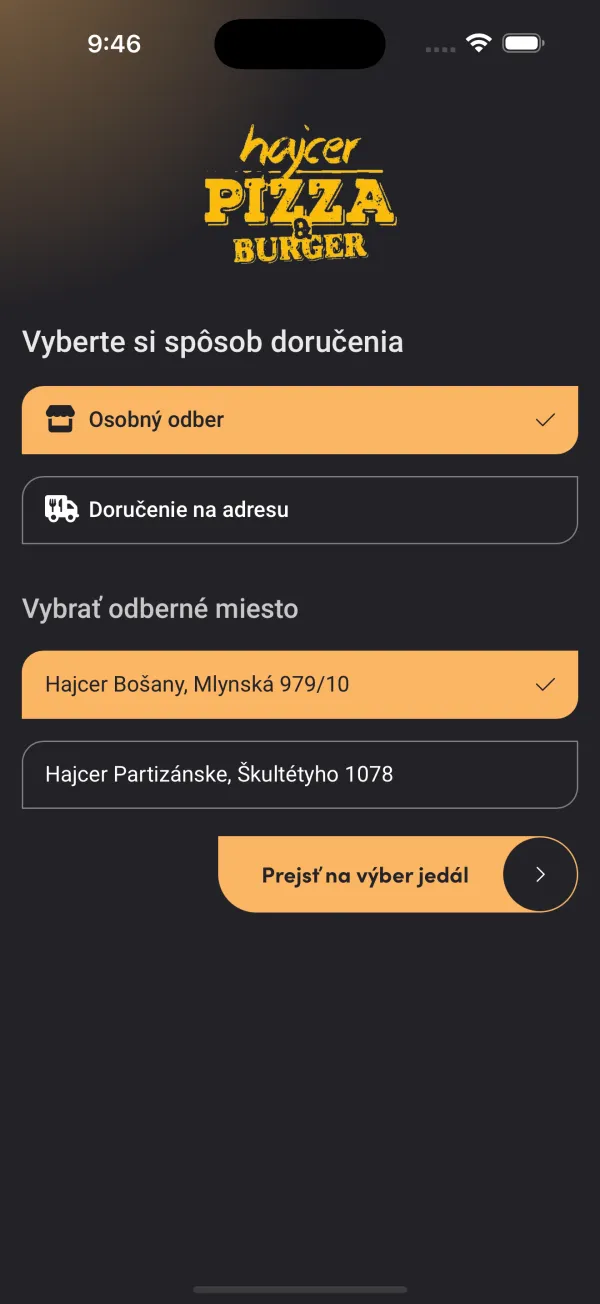
Selecting the branch and fulfilment method is the first step in the app. Everything that follows — menu, prices, availability and timing — depends on that branch.
PLU as a shared language
Every dish, variant and side has its own PLU code in administration. Orders reach the point-of-sale system in a structure it understands, without manual re-entry.
Administration designed around the operation
Menus, orders and operational settings are in one place, and staff see only what they need during a shift.
06 /Architecture
The customer app, administration and point-of-sale system are connected into a single ordering process. PLU integration links the app’s menu to items in the point-of-sale system.
07 /UX
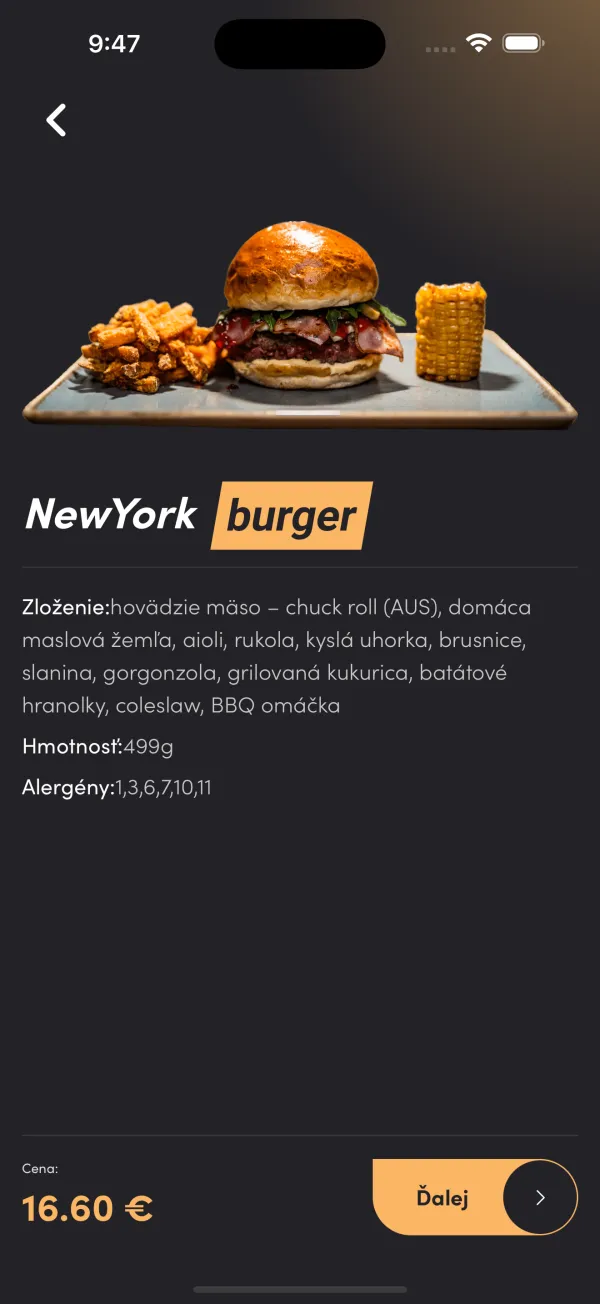
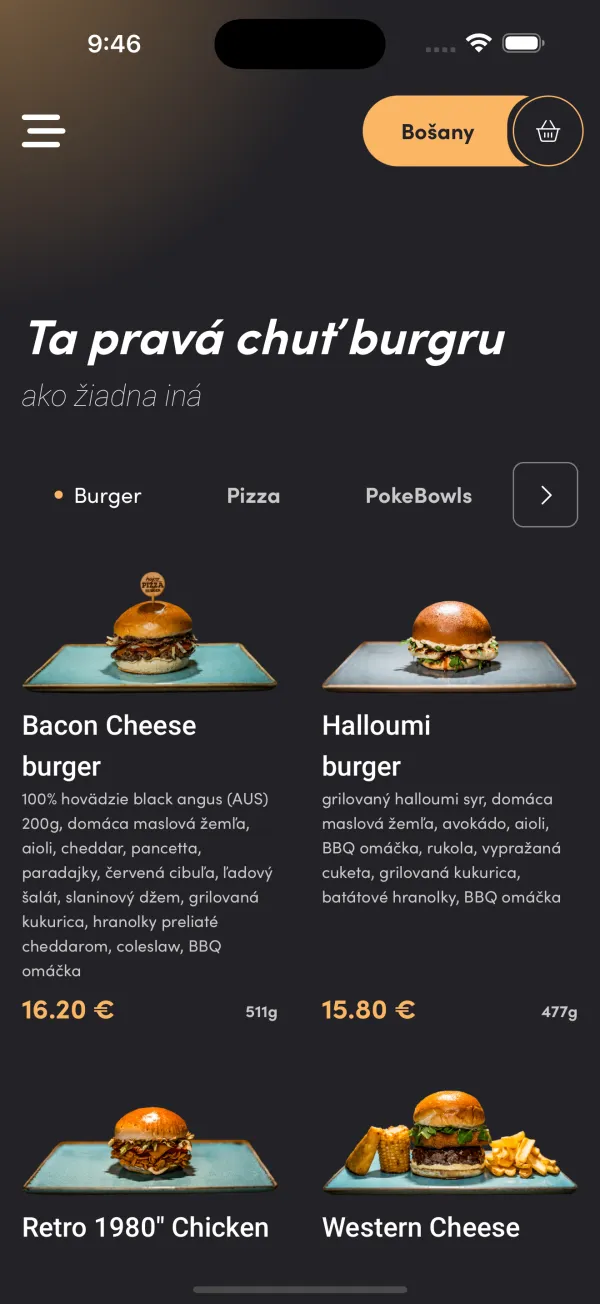
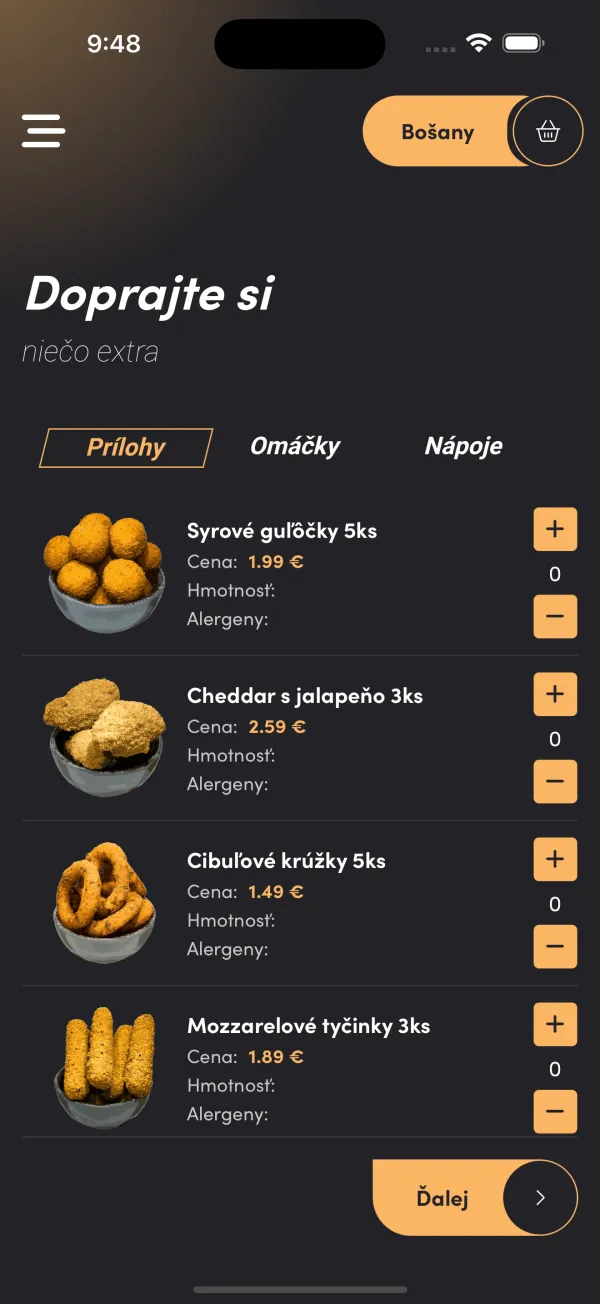
The ordering flow is short: branch and fulfilment method, menu categories, dish details with sides, basket and confirmation. Photos and prices are visible immediately; sides are offered with the relevant dish rather than as a separate step.
08 /Technology
iOS, Android, Web administration, Point-of-sale integration / PLU
09 /Outcome
The app handles online orders for a restaurant with two branches. Marián Bulák, Operations Director at Hajcer restaur s.r.o., says: “The solution works reliably in everyday operation, and even more demanding requirements were no obstacle.” (Translated from Czech.)
Gallery